

Vapor barriers are essential components in the construction and renovation industry. They play a crucial role in protecting structures and improving the energy efficiency of buildings. In this article, we take a closer look at the usefulness of vapor barriers in the building sector.
What is a vapor barrier?
A vapor barrier is a membrane designed to limit the transfer of water vapor through the walls of a building. It is generally made of materials such as polyethylene, modified bitumen, or aluminum. The vapor barrier thus contributes to the longevity of the structure andthe durability of its performance over time. It also helps to improve the building's airtightness with respect to the outside environment, which contributes to reducing energy consumption.
How does a vapor barrier membrane work?
The vapor barrier membrane works by creating a barrier that is impervious to water vapor. It is measured by its permeance, expressed in ng/(Pa·s·m²). Low permeability indicates high resistance to vapor passage. By blocking water vapor, the vapor barrier prevents condensation inside structures. It thus reduces the risk of mold and deterioration of insulating materials.
There are two types of waterproofing membranes: vapor barriers with variable moisture resistance and those with fixed resistance.
Vapor barriers with fixedSd resistance
Membranes with a fixedSd value have a constant, generally high permeability that does not vary depending on ambient humidity conditions. They are often used in environments where humidity control must remain stable, such as in cold climates, to prevent condensation inside walls.
Vapor barriers with variable moisture resistance (Sd )
Vapor barriers with variable moisture resistance offer the best protection against condensation damage in buildings. They adjust their permeability according to changes in relative humidity. In winter, they are closed to diffusion and provide ideal protection for insulation against moisture penetration. Conversely, in summer, they are able to greatly reduce their diffusion resistance, thus ensuring the best possible evaporation conditions. Vapor barriers with a variableSd value are therefore an ideal choice for environments with significant seasonal variations in humidity or for renovations of old buildings where the original materials must be protected against residual moisture while allowing the building to breathe to a certain extent.
The choice of a vapor barrier with a fixed or variableSd value therefore depends mainly on the climatic conditions and specific moisture control requirements of the construction or renovation project.
Please note: There are also different types of vapor barriers: some membranes are reinforced, while others are not. It is therefore advisable to choose a reinforced vapor barrier for blown-in thermal insulation (walls, roof slopes, etc.). The reinforcement makes the membrane more tear-resistant, making it more suitable for this type of application.

unreinforced vapor barrier membrane ©Igloo France Cellulose – Ivap25

reinforced vapor barrier membrane©Igloo France Cellulose – IvapHygro
Usefulness of vapor barriers: what the regulations say
New (RE2020)
The 2020 Environmental Regulations (RE2020) impose high standards for energy efficiency and indoor comfort in new buildings. They require the installation of vapor barriers to ensure optimal airtightness, which is essential for achieving thermal performance and greenhouse gas emission reduction targets. However, the installation of a vapor barrier membrane is not always mandatory.
Under renovation
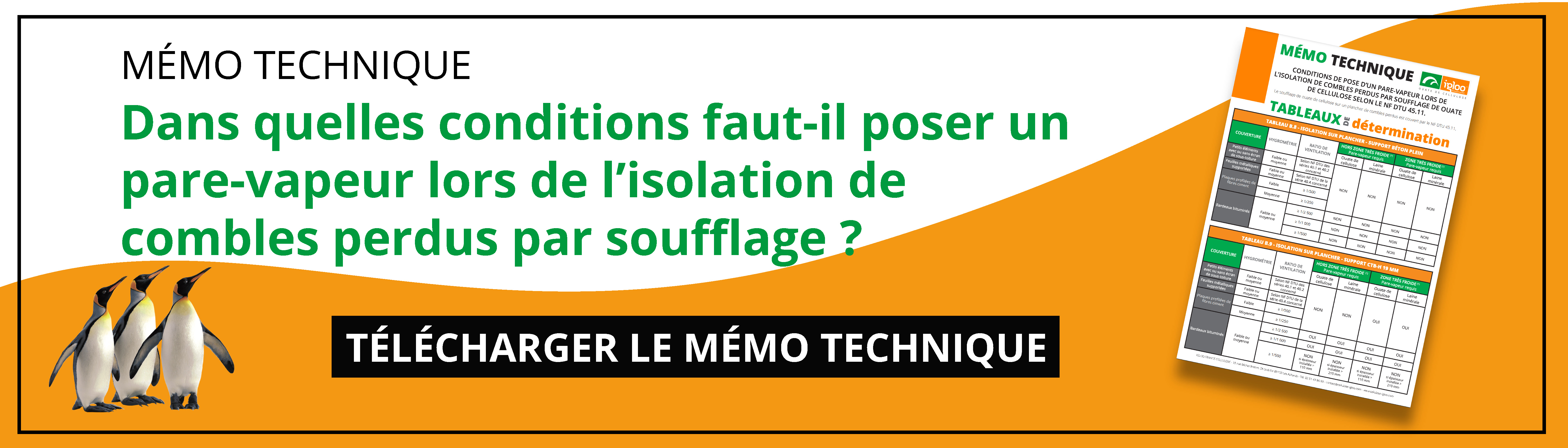
In the case of renovation, depending on the scope of the work and the type of intervention (interior or exterior), it is not always technically easy to properly install the vapor barrier membrane in the attic. In this case, it is advisable to refer to the Technical Assessment documents, which may offer alternative solutions, and to the relevant NF DTU standards to check the requirements for installing a vapor barrier. In addition, the use of vapor barriers is often required in order to qualify for financial assistance and subsidies.
Consult the vapor barrier installation guide for insulation work published by ADEME.
The effects of humidity in a building
Moisture in a building can have serious consequences, affecting both the structure and indoor comfort. It promotes the growth of mold and mildew, causing health problems such as allergies and respiratory disorders. Excessive moisture degrades building materials, reducing the thermal efficiency of insulation and increasing energy costs. In addition, it can cause deformation, cracking, and premature deterioration of structural elements. Proper moisture management, including the installation of vapor barriers, is essential to maintaining the durability and air quality of buildings.
The benefits of using a vapor barrier
Moisture protection
The vapor barrier protects structures from the harmful effects of moisture. By preventing water vapor from penetrating building materials, it prevents mold growth and deterioration of insulation and structural components.
Improving energy efficiency
By keeping insulation materials dry, vapor barriers preserve their effectiveness. Conventional insulation that is too damp will see its thermal properties deteriorate. This can lead to significant increases in heating and cooling costs. A properly installed vapor barrier ensures better overall energy performance.
Interior comfort
Controlling humidity with a vapor barrier helps maintain a stable and comfortable indoor temperature. By preventing excessive temperature and humidity fluctuations, it creates a healthier and more pleasant living environment for occupants.
Vapor barriers are essential for ensuring the durability, energy efficiency, and comfort of buildings. Their use, both in new construction and renovation, is essential for meeting regulatory requirements and optimizing structural performance. By complying with standards and choosing high-quality vapor barriers, building professionals can guarantee more durable and energy-efficient constructions.


